
Two Minutes Per Customer: What Happens at the Counter on a Monday Morning.
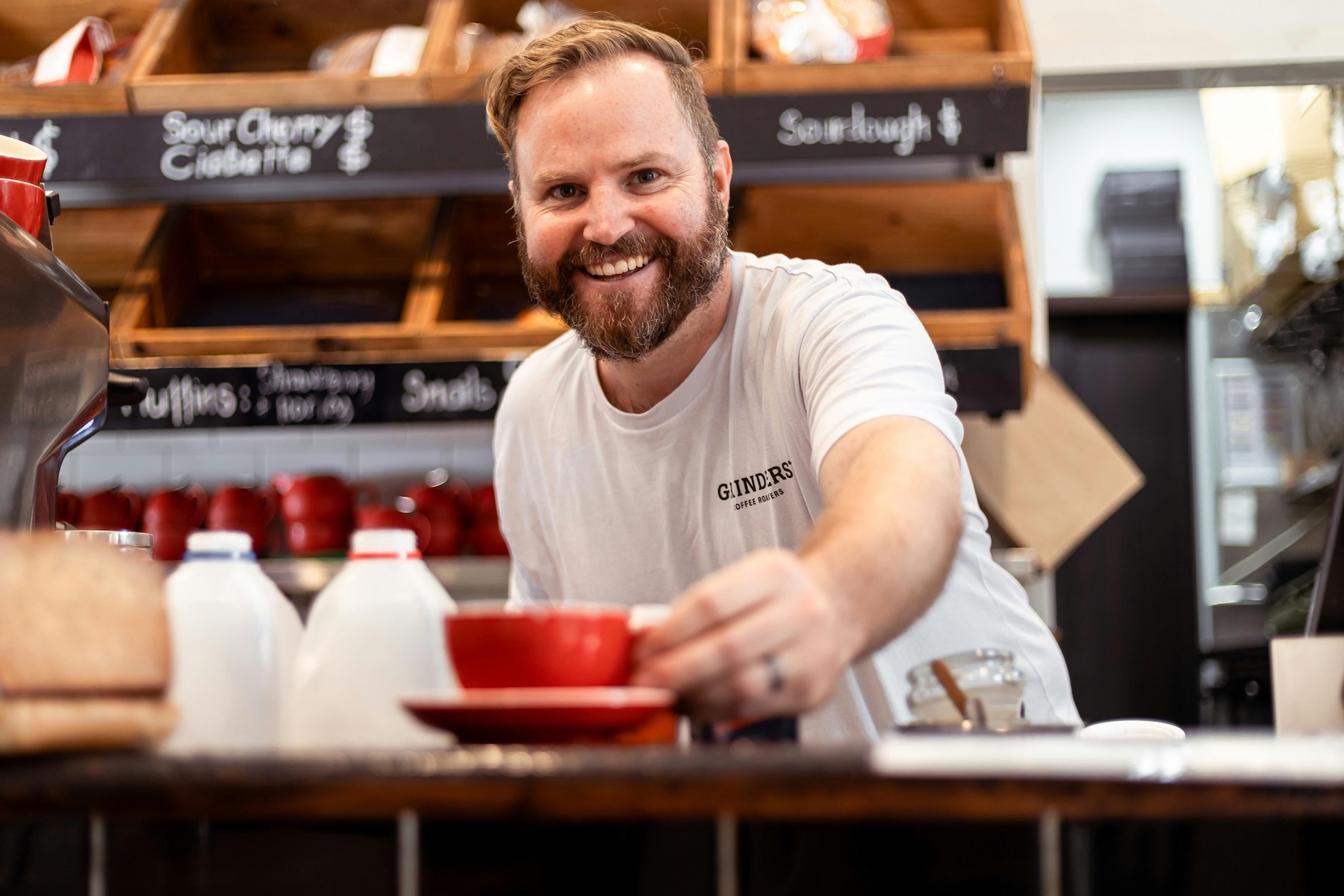
It's Monday, 8:00 AM. Banyan Coffee Co., Raffles Place, Singapore. The queue is ten deep. Your colleague called in sick. You're the only barista on the floor.
The next customer reaches your counter. You have about two minutes.
In those two minutes, you have to make a drink, take payment, and decide what to do with the actual person standing in front of you. Are you going to give them a transaction, or a connection? Will they come back tomorrow because of who you were just now — or never come back because of how you made them feel?
That's the territory of our newest scenario on RolePlays.ai: The Morning Rush.
It's free throughout May. Register or log in and you'll find it waiting.
Why this scenario exists
Companies invest billions in customer experience. Process improvements. Loyalty programs. Mobile apps. Brand campaigns. All of it points toward one moment: the two minutes when a real person stands in front of one of your employees and decides whether they belong.
That moment is where brand actually happens. Or doesn't.
The frontline workers who own that moment — baristas, retail associates, cashiers, hospitality staff — almost never get to practice it. They get an onboarding video. Maybe a customer service training in week two. Then they're thrown into the queue and learn by failing in front of real people. The customers who walked away because of a clumsy moment never come back to give feedback. The damage is invisible.
The Morning Rush makes that moment practiceable. Six customers. Six very different worlds walking up to your counter. Each one engineered around a different challenge that frontline staff actually face — and that customer service handbooks rarely name explicitly.
Six customers, six worlds
Marcus Teo — Managing Director at a regional investment bank. Daily regular. Reaches the counter with his phone in hand, eyes on his watch. "Large long black. And I've been standing here for three minutes." He doesn't ask questions. He makes statements and expects compliance. The challenge: maintain warmth and professional dignity without performing deference — and without becoming defensive.
Priya Menon — 33-year-old project manager at a tech firm. Morning regular. Arrives on her phone, holds up one finger, mouths her order — "Flat white. Oat." — then returns to her call while fumbling for her card. She's not rude. She's distracted, half-present, and treating you as background. The challenge: serve her well without forcing connection she didn't ask for, while staying genuinely human.
Oliver Sands — UX designer at a creative agency. Comes in most mornings. Approaches with his reusable cup, studies the menu briefly even though he orders the same thing, and says: "Pour-over. Single origin if you have one. And — I don't want to make this a thing, but last time the extraction was noticeably off." The criticism is wrapped in mindfulness language. The challenge: take the feedback seriously without becoming defensive, and without letting "I don't want to make this a thing" do the work of avoiding accountability.
Margaret Hu — 61-year-old retired schoolteacher. Lives alone in a flat near Raffles Place. Comes in several mornings a week. Arrives with a warm smile, already mid-thought: "Oh good, you're here! I was just saying to myself on the walk over — Monday mornings are actually my favourite, isn't that funny? My usual, please. How was your weekend?" She uses your attention as oxygen. The challenge: honor her humanity without holding up the queue — and without going through the motions of a connection that isn't real.
Ravi Chandran — Food journalist covering Singapore's specialty coffee scene. First time at Banyan. Studies the menu, then looks at you: "First time here. What single origin are you running today?" He's deciding whether Banyan deserves a write-up. The challenge: be authentic without performing, demonstrate craft without showing off, treat him as a customer rather than as a critic.
Amal — 22-year-old construction worker. Starting his shift at a nearby site at 9 AM. First time at a specialty coffee shop. Reaches the counter, glances at the menu, then at the prices, then at the queue behind him. Speaks quietly: "Can I have a cappuccino, please?" The challenge — and this is the one most frontline training never names — is to make him feel he belongs here without making him feel managed. Power dynamics don't only run downward from impatient customers. They also run downward, invisibly, from a polished space toward someone who isn't sure if it's for him.
The four skills the scenario tests
The grading covers four dimensions, weighted by importance.
Situational reading (30%). Did you identify what the customer actually needed beyond their order — by picking up on verbal and behavioral cues within the first two exchanges? Marcus needs efficiency and respect. Margaret needs to be seen, briefly. Amal needs to feel he belongs. Reading is the first move.
Adaptive communication (30%). Did you adjust tone, pace, and approach to match each customer while remaining authentic? The same warmth that works with Margaret feels saccharine with Marcus. The same efficiency that works with Marcus feels dismissive with Margaret.
Professional boundary management (20%). Did you maintain warmth and service quality under time pressure, emotional demands, and queue flow? You can't have a five-minute conversation with Margaret while nine other people are waiting. You also can't make her feel like an inconvenience.
Dignity and respect under pressure (20%). Did you handle power dynamics in both directions — customers asserting dominance and customers feeling they don't belong — without losing composure or authenticity? This is the hardest one. It's the one the brand depends on.
What this is, and isn't
The Morning Rush is not a service training course. It's not designed to teach you how to make coffee or how to greet a customer. It assumes you already know those things.
What it tests is the capacity that no checklist captures: reading a person fast, adapting in real time, and holding professional dignity when the moment doesn't go to plan. That's the skill that separates a counter that builds loyalty from a counter that drives it away — and it's the skill that customer experience investments depend on but rarely train for explicitly.
The scenario also serves a broader purpose. Anyone who has never worked behind a counter — and that includes most senior leaders, most marketers, most product designers — can play it and discover what frontline staff actually navigate every day. We've heard from L&D leaders that the scenario changes how they think about service training and frontline empathy programs. That alone is worth the 5–10 minutes.
Try it in May
The Morning Rush is free throughout May on RolePlays.ai. Six personas, beginner-to-intermediate difficulty. Each session runs 5–10 minutes. You can do them all in one sitting.
Register or log in and you'll find the scenario waiting. Pick whichever customer feels most familiar — or most uncomfortable.
After each session, you'll receive detailed feedback scored against the four learning objectives. The feedback references specific moments from your conversation. You'll see what you read well, what you missed, and where the customer wanted something you didn't give them.
Two minutes per customer. Welcome to the morning rush.
If your organization invests in customer experience and wants to give your frontline staff structured, repeated practice for the conversations behind your service metrics, let's talk.